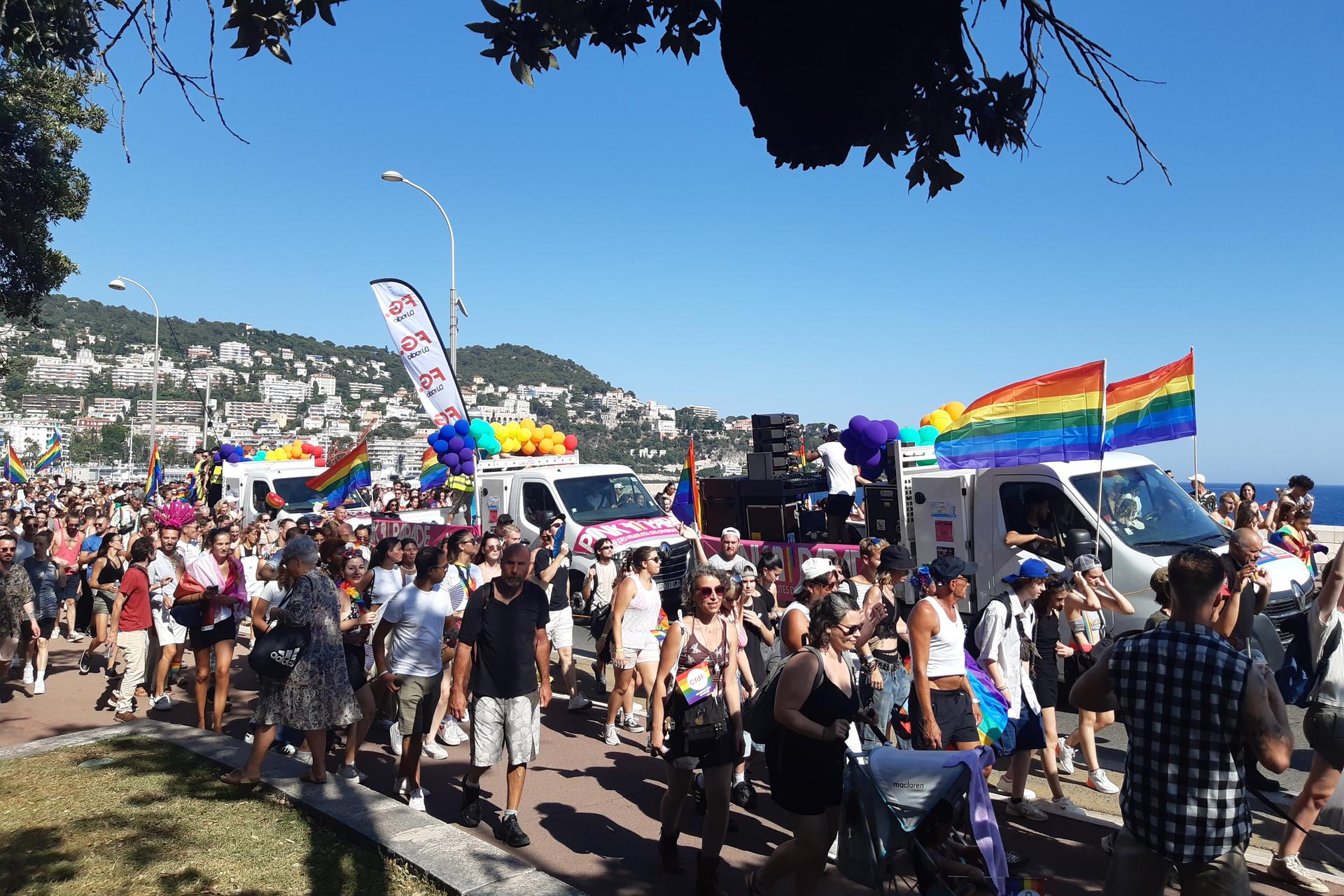
Pride Month is a celebration of love and freedom for everybody, everywhere, each year in June. I had the chance to grow with people supporting me, and coming out had never been an issue or a traumatic experience. However, I am sadly not the rule but the exception. It is the reason why Pride Month is so important for queer people, since a lot of them suffer from isolation due to their identity and/or sexual orientation. The goal is to proudly demonstrate the resilience and love surrounding the LGBTQIA+ community1. This community tends to reunite every person that defines themselves in any other way than heterosexual and/or cisgender. The acronym designates the most common groups represented, meaning “lesbian”, “gay”, “bisexual”, “transgender”, “queer”, “intersex” and “asexual” people2. Pride Month allows people to meet and enjoy times in which they do not feel discriminated against, shamed or in danger3. However, queer rights cannot be taken for granted and need to be fought for every day around the world. But to understand the fight today, it is important to learn where and when Pride Month and Pride marches originated.
History of Pride Month and Pride marches
During the 1960s, in the United States, in every state but Illinois, homosexuality was considered a criminal offense4. Until 1973, it was considered a psychiatric disorder by the American Psychiatric Association5. Consequently, bars and restaurants known for serving or having employees who are part of the LGBTQIA+ community risked being shut down6. On June 28, 1969, police raided the Stonewall Inn, a popular gay bar in Greenwich Village, in New York City7. Conflict escalated between the owners, the employees and members of the community against the police. It lasted for six days8. It represents the culmination of years of activism. Occurring in the context of the civil rights movement, the Stonewall rebellion became a galvanizing force.
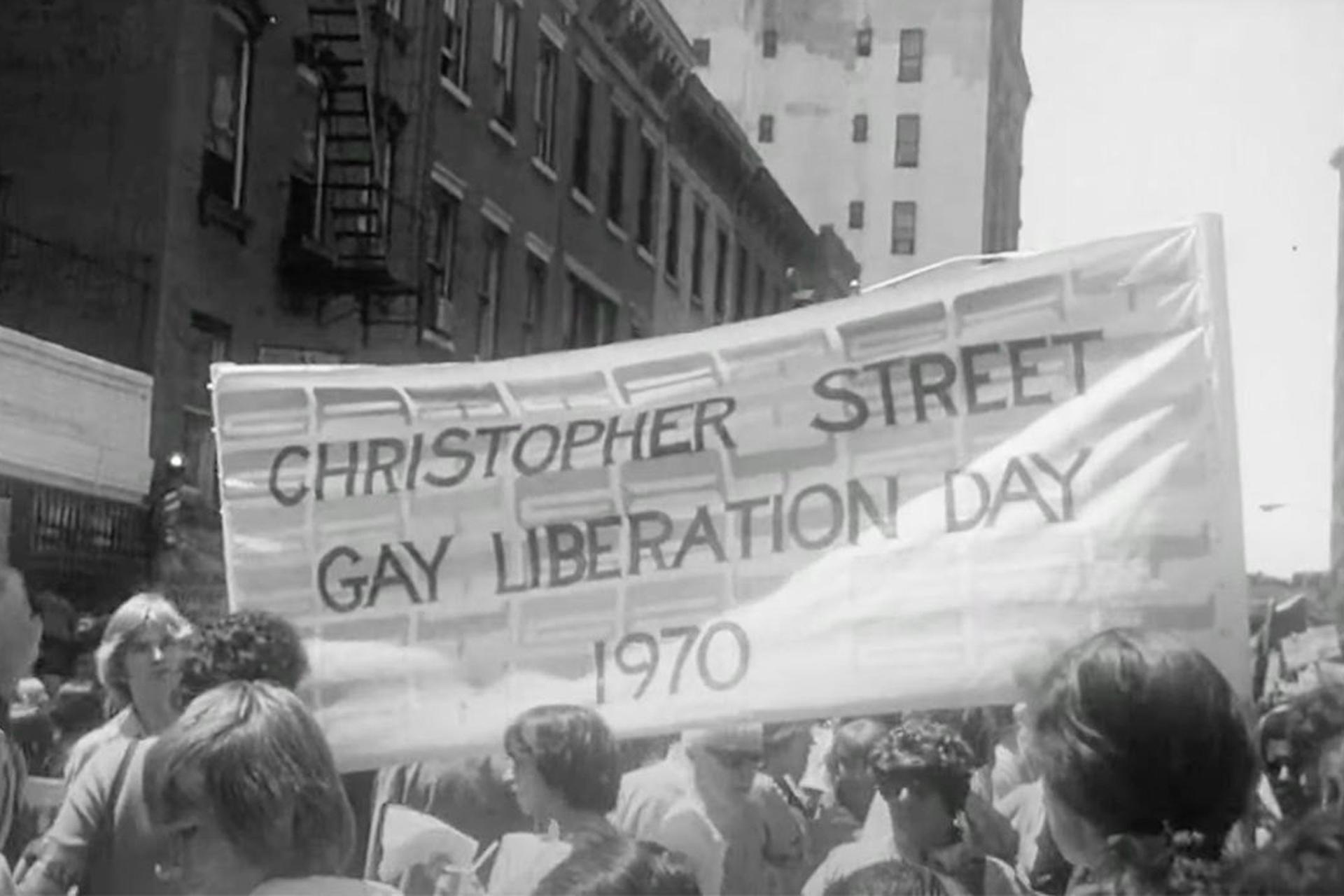
One year later, on the same date, different groups of activists such as the Gay Liberation Front decided to organise the first Pride Week and Pride Parade on the street in which was located the Stonewall Inn (“Christopher Street Liberation Day March”) to protest against police brutality and queer rights in general9. It reunited between three and five thousand marchers at the time10. Historian Lilian Faderman declared, “Never in history had so many gay and lesbian people come together in one place and for a common endeavour.11"
After that event, Pride parades started to be organised around the country, and soon after, around the world. In June 1999, US President Bill Clinton declared every June, in the United States, will be the Gay and Lesbian Pride Month to celebrate the anniversary of the Stonewall uprising12. And since then, Pride Month never stopped. However, gay liberation was not equal for everybody. People of colour, women and trans people were often marginalized by the overall gay movement13. It is for this reason that Pride manifestations and International Women’s Day have such an intricate relationship.
Relation between Pride manifestations and International Women’s Day
International Women’s Day is on 8th of March each year to celebrate women’s rights and gender equality. But the feminist movement started in 1857 with the first organized strike by women workers in New York City on March 8 regarding fair working conditions and wages, alongside equal rights14. Since then, women all over the world have been fighting for their rights and the recognition of equality in every field of society, such as labour, education and medicine.
In 1977, the United Nations reunited its Member States to decide on the date of the year marking the “Day for Women’s Rights and International Peace”15. Since this year, March 8 commemorates and promotes women’s rights all over the world, in favour of an equal society between men and women. In 2026, the theme was “Rights. Justice. Action. For ALL Women and Girls”16. It represents the main problem in today’s society regarding gender inequality: the law. In fact, women have only 64% of the legal rights that men hold worldwide17. At this pace, it will take 286 years to close legal protection gaps18 in fields such as family with child marriage and divorce but also in the work field with a gender pay gap of around 12% in 2023 for women in the European Union19. Consequently, International Women’s Day is more needed than ever.
Between Pride Month and International Women’s Day, the relation is obvious and inevitable. In both cases, it is the celebration of two categories of people who have been fighting for centuries over their condition and their rights to exist as equals with the rest of the society. Both have also been fighting against discrimination, violence and silence. Their constant fights have been emphasized with these two events, happening each year. It allows people to remember that everything is not over yet and activism needs to keep going to improve life for everybody. Because if progress needs to be made for women’s condition, Pride Month also reminds the public that the LGBTQIA+ community still needs support in today’s world.
Importance of Pride parades in today’s world
It is important to understand that for the past 56 years, Pride Month has allowed the LGBTQIA+ community to freely enjoy and fight for its existence. Nonetheless, it is also a reminder that it needs to exist for people of the community that are not legally able to live in peace in their own country. In fact, at least 67 States have national laws criminalizing same-sex relations between consenting adults, and at least 9 of them have national laws criminalizing forms of gender expression targeting transgender and gender nonconforming people20. Considering that there are 197 countries in the world, with the 193 Member States in the United Nations, adding the Holy See, the State of Palestine, Taiwan and Kosovo, it means that almost 35% of countries in today’s world are criminalising the LGBTQIA+ community. Therefore, it is understandable that Pride manifestations and parades are still fundamental for people who can’t express themselves or live freely with their gender or their love.
However, outside of the law, Pride Month allows everybody to find comfort in society when there is nobody to support you. Even when the law allows you to be, culture and religion can become obstacles to coming out to people around you. In modern history, queerness has been silenced and rejected, considered a sin for monotheist religions21. Later on, mentalities have been conditioned by media and society to repudiate the LGBTQIA+ community22. Nowadays, minds have evolved, and support has been brought by a vast majority of the world. However, not everybody has evolved at the same pace, and people can refuse to accept queer people as a whole. In this case, Pride Month, with its marches, can help members of the LGBTQIA+ community rejected by their peers to find freedom and acceptance.
In conclusion, Pride Month allows everybody to celebrate love, freedom and equality around the world. It is an ode for every discriminated person still fighting for their existence in today’s society. International Women’s Day also supports women and girls to improve their condition by claiming gender equality in the law and in reality. The importance of these celebrations is not to be forgotten and reduced by obviousness. If the fight is still going on for somebody, somewhere, it is still important for everybody, everywhere. It is the reason why I am here today with the international NGO Stikado. Our mission is to break down stereotypes surrounding the LGBTQIA+ community and to foster open conservations on the topic to educate and promote understanding at all levels.
References
- BBC, “Pride: What is it and why do people celebrate it?”, June 1st, 2022, https://www.bbc.co.uk/newsround/52872693 [consulted on 18/05/2026]
- San Francisco Gay Men’s Chorus, “LGBTQIA+ Meaning: Acronym Breakdown and Definitions”, April 26th, 2023, https://www.sfgmc.org/blog/lgbtqia-meaning [consulted on 18/05/2026]
- Lemire, Sarah, “What is Pride Month? What to Know About the Annual Observance”, Today, June 4th, 2025.
- National Association for State Community Services Programs, “In Honor of Pride Month – A Little History…”, n.d., https://nascsp.org/in-honor-of-pride-month-a-little-history/ [consulted on 20/05/2026]
- UC Santa Cruz University Library, “The 1960’s”, n.d., https://library.ucsc.edu/reg-hist/the-1960s [consulted on 20/05/2026]
- National Association for State Community Services Programs, “In Honor of Pride Month – A Little History…”, n.d., https://nascsp.org/in-honor-of-pride-month-a-little-history/ [consulted on 20/05/2026]
- Ibid.
- Library of Congress, “LGBTQIA+ Studies: A Resource Guide”, n.d., https://guides.loc.gov/lgbtq-studies/stonewall-era [consulted on 20/05/2026]
- NYC LGBTQ Historic Sites Project, “NYC Pride March”, n.d., https://www.nyclgbtsites.org/site/starting-point-of-nycs-first-pride-march/ [consulted on 20/05/2026]
- Library of Congress, “LGBTQIA+ Studies: A Resource Guide”, n.d., https://guides.loc.gov/lgbtq-studies/stonewall-era [consulted on 20/05/2026]
- Faderman, Lilian, “The Gay Revolution: The Story of the Struggle”, New York: Simon & Schuster, 2015.
- National Association for State Community Services Programs, “In Honor of Pride Month – A Little History…”, n.d., https://nascsp.org/in-honor-of-pride-month-a-little-history/ [consulted on 20/05/2026]
- Library of Congress, “LGBTQIA+ Studies: A Resource Guide”, n.d., https://guides.loc.gov/lgbtq-studies/after-stonewall [consulted on 20/05/2026]
- International Women’s Day, “IWD Timeline”, n.d., https://www.internationalwomensday.com/Timeline [consulted on 25/05/2026]
- Ibid.
- UN Women, “International Women’s Day 2026: Rights. Justice. Action.”, United Nations, n.d., https://www.unwomen.org/en/get-involved/international-womens-day [consulted on 25/05/2026]
- Ibid.
- United Nations, “International Women’s Day 8 March”, n.d., https://www.un.org/en/observances/womens-day [consulted on 25/05/2026]
- European Parliament, “Understanding the gender pay gap: definition, facts and causes”, European Union, January 20th, 2020, https://www.europarl.europa.eu/topics/en/article/20200109STO69925/understanding-the-gender-pay-gap-definition-facts-and-causes#gender-pay-gap-data-by-country-and-in-the-eu-as-a-whole-1 [consulted on 25/05/2026]
- Human Rights Watch, “The love that dare not speak its name”, n.d., https://features.hrw.org/features/features/lgbt_laws/ [consulted on 25/05/2026]
- Vegter, Abigail, “The Special Role of Religion in LGBT-Related Attitudes”, Oxford Research Encyclopaedia of Politics, November 19th, 2020.
- UC Santa Cruz University Library, “The 1960’s”, n.d., https://library.ucsc.edu/reg-hist/the-1960s [consulted on 20/05/2026]